Stakeholder-Based Assessment: Multiple Criteria Analysis for Designing Cycle Routes for Different Target Populations
Where presented / published:
GIS in Sustainable Urban Planning and Management, CRC Press, Dec 2018
Potential cyclists, beginner cyclists, utility cyclists, "recreationalists", and trail riders – similar categories have been defined as target populations by cycle programmes worldwide. Yet few transport agencies have adopted systematic ways for dealing with their differing needs and preferences. This research (undertaken initially while Glen Koorey was working at Canterbury University) presented a multiple criteria methodology for incorporating target populations’ preferences into the design of cycle routes.
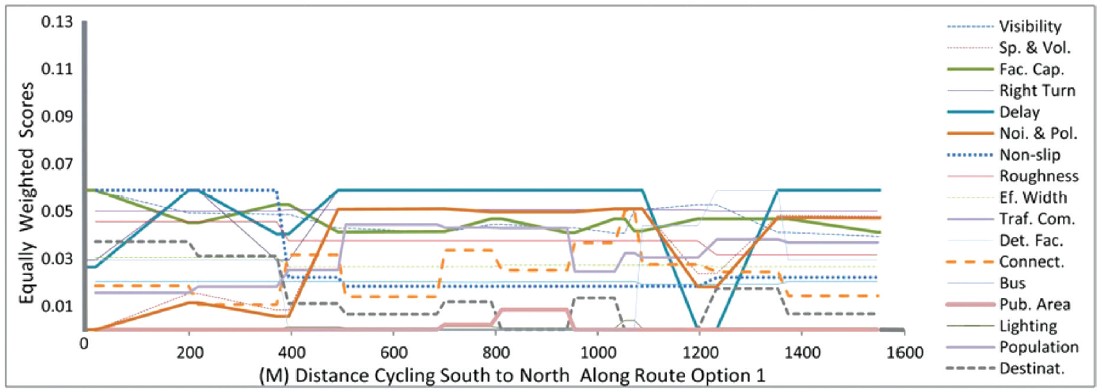
In a book on GIS in Sustainable Urban Planning and Management, Glen co-authored a chapter on Stakeholder-based Assessment alongside Dutch-based researchers Amy Butler, Mark Brussel, and Martin van Maarseveen. The methodology in this work was applied to cycleways in Christchurch with the process covering government and policy-defined target (cycling) populations, stakeholder engagement, defining locally relevant design criteria, and their incorporation into multiple criteria analysis (MCA). Results from this analysis showed how these population’s preferences can be weighted to systematically highlight bicycle-friendly scores of all junctions and segments along a route.
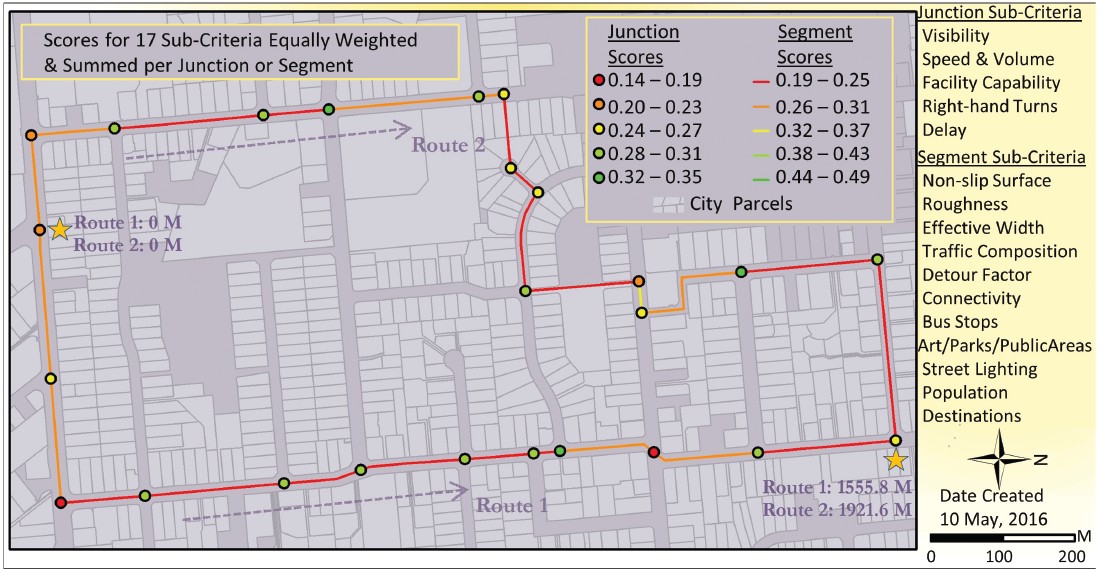
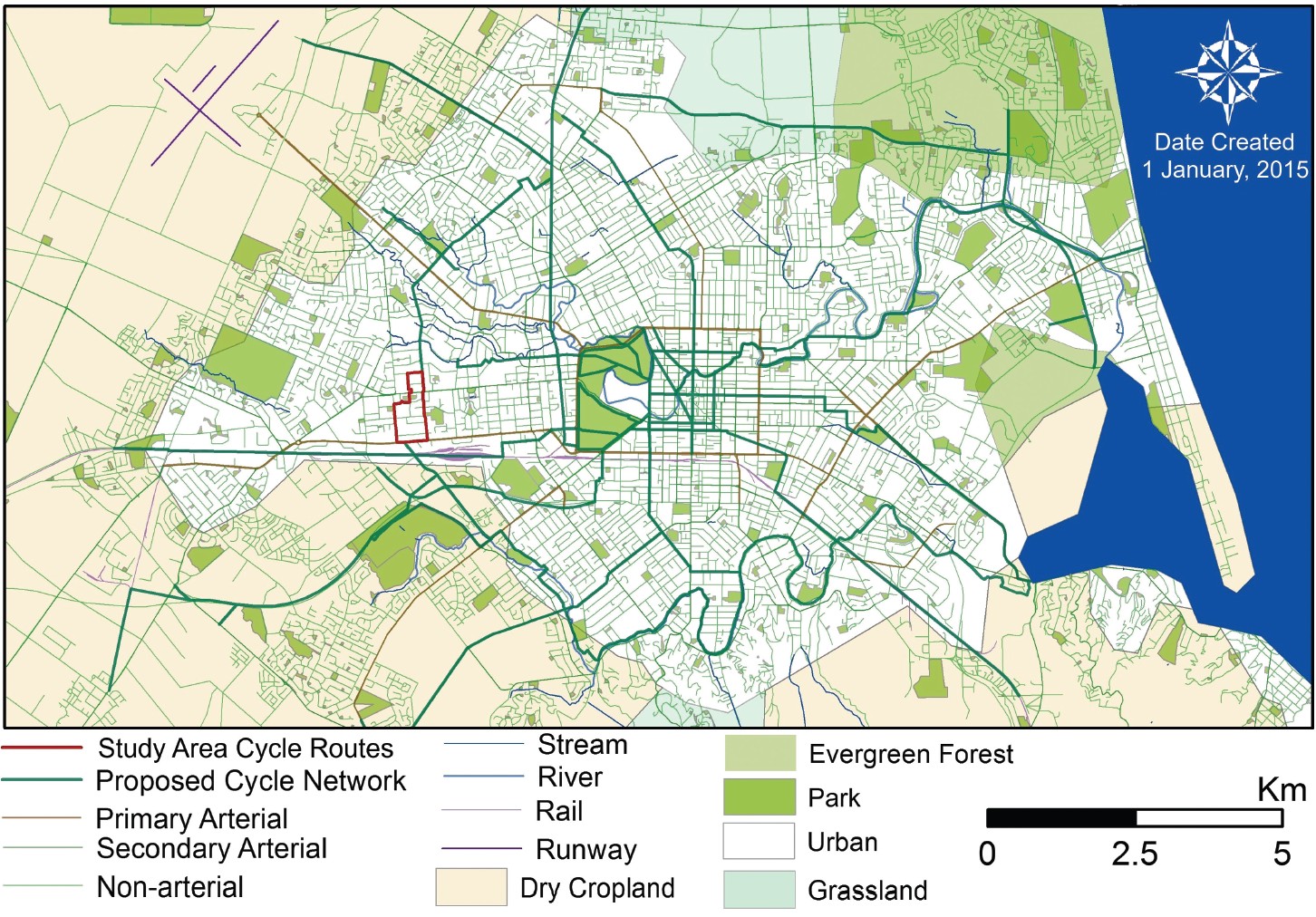
MCA was used to assess a section of the Nor'west Arc, an 8 km planned orbital cycle route that city designers had previously identified in an ad-hoc manner. A study area was chosen along this planned route in Middleton to include two simple route options for assessment. After reviewing several design criteria, 17 sub-criteria were identified for investigation and scores were weighted by the different target cycling groups.
The detailed criteria scores from this methodology can highlight sections of cycling routes needing the most design improvements if a single route is supposed to serve multiple target populations - or to designate separate routes that are favourable for each target group specifically. Once facility improvements are constructed, it is important to judge their success and to feed this knowledge back into the design process. The methodology developed allows target populations participating as stakeholders to provide this essential feedback and iteratively improve cycleway programmes over time.