Modelling Safety and Mode Shift impacts of Speed Management
Where presented / published:
Australasian Road Safety Conference, 26-29 Oct 2026, Sydney, Australia
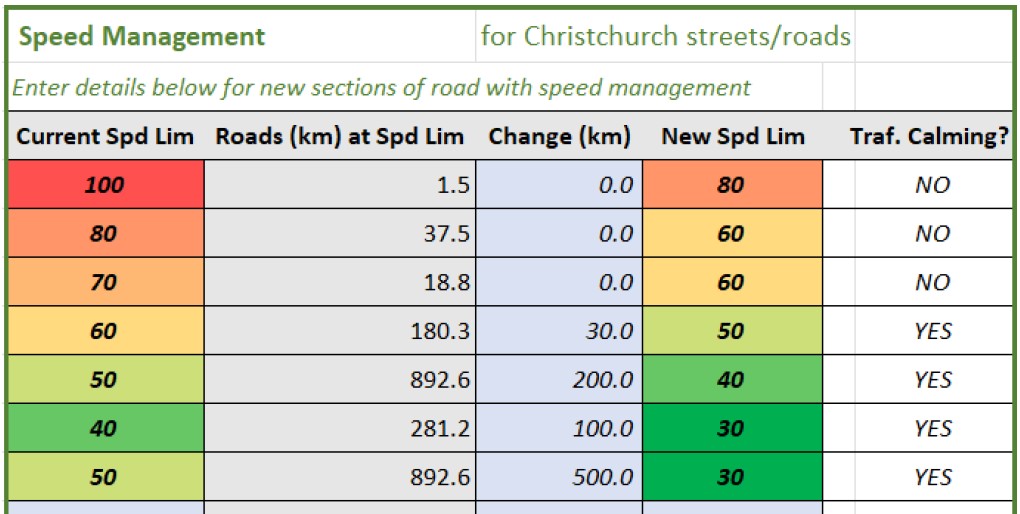
Recent research by ViaStrada updated a previous spreadsheet model that estimated changes in safety and mode-share from changes to infrastructure conditions or trip numbers across New Zealand cities. One of the key new findings was the development of a method to adjust safety and mode-shift metrics when speed management measures were introduced.
Using data from Elvik’s exponential risk model and comparisons of mode-share versus risk in different cities, a method was determined to estimate expected reductions in DSIs and expected increases in active and public transport modes when lower speed limits and traffic calming were applied.
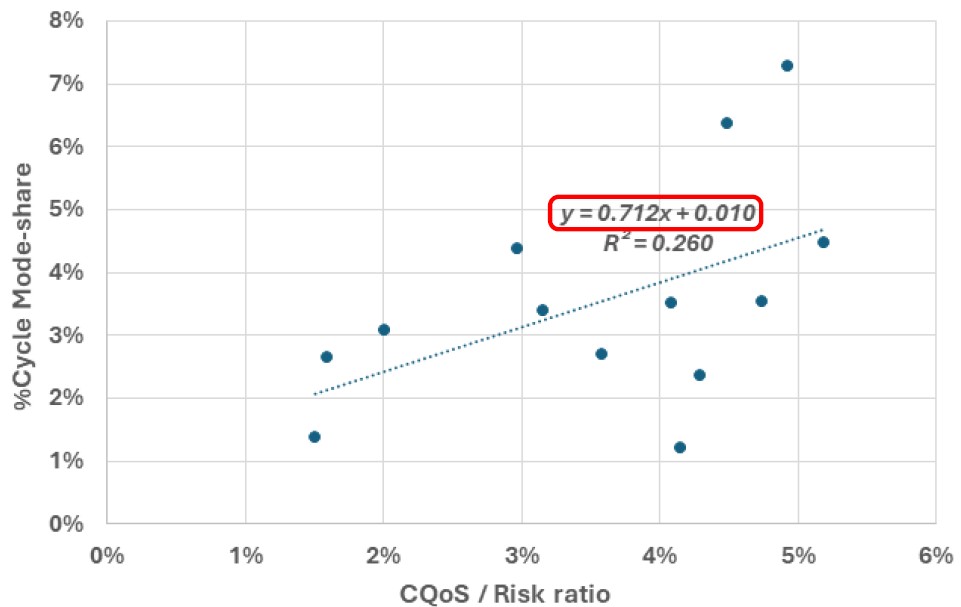
Although the correlations were slightly weak, the results suggest that, for every 1% (absolute) increase in CQoS/Risk ratio, there is likely to be an absolute increase in cycling mode-share of 0.6-0.8%. Similarly, for every 1% (absolute) decrease in Weighted Risk/km, there is likely to be a proportionate increase in walking mode-share of 0.4-0.6% and 4-6% for public transport (bus/train) modes.
Glen Koorey presented these findings at the ACRS Conference in Sydney; you can find the presentation here.