Minimum walking data requirements to progress pedestrian safety
Objective
Research to identify minimum pedestrian safety data sets for Austroads project on Keeping People Safe when Walking
Client
Austroads
Location
International
Deliverable
Research report, Practice Guideline, Data Framework spreadsheet
Timeframe
Sep 2024 - Apr 2026
Project Status
complete
Background
As part of the Austroads “Keeping People Safe When Walking” initiative, ViaStrada led a research project focused on identifying the minimum pedestrian data sets needed to support progress toward zero pedestrian deaths and serious injuries.
The project involved a three-pronged research approach:
- Literature Review: An inventory of existing pedestrian-related datasets in Australasia and internationally was developed. This helped identify the most useful data sources and propose a practical minimum data set for safety monitoring.
- Online Survey: Distributed across industry channels, the survey gathered insights on current data usage, key gaps, and needs from professionals working in pedestrian safety.
- Agency Interviews: In-depth interviews with transport professionals from state and city agencies provided richer context and practical perspectives on data collection and use.
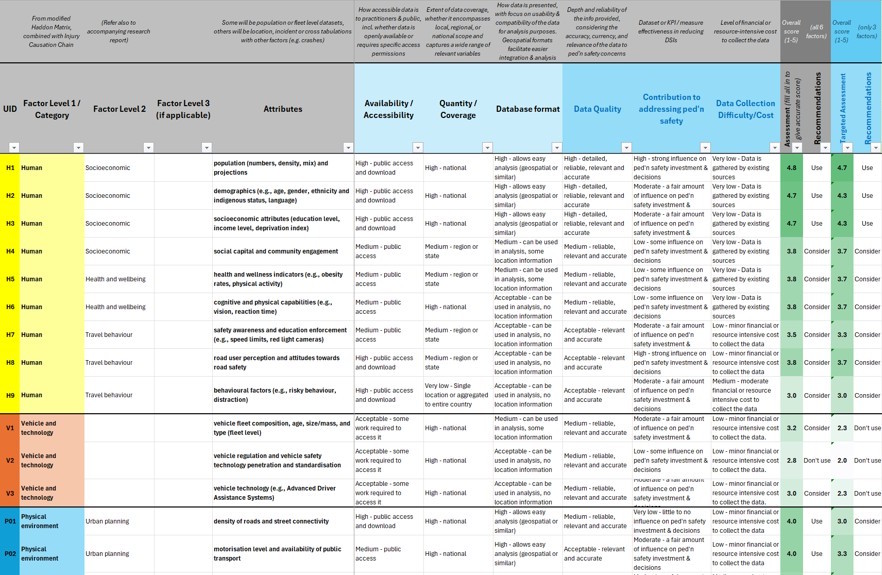
The findings were compiled into a research report, a data inventory spreadsheet, and a Practice Guideline. The Guideline offers clear, actionable advice for road safety practitioners on:
- Available pedestrian data types
- Their relative importance and effectiveness
- Data availability and accuracy
- Collection, storage, and analysis methods
- Real-world examples and case studies
This work supports better-informed decisions and more effective strategies to improve pedestrian safety across Australasia.