Left turn treatments at signalised intersections - white paper
Where presented / published:
ViaStrada white paper, 9 September 2026
A safety evaluation of slip lanes and signalised left turns
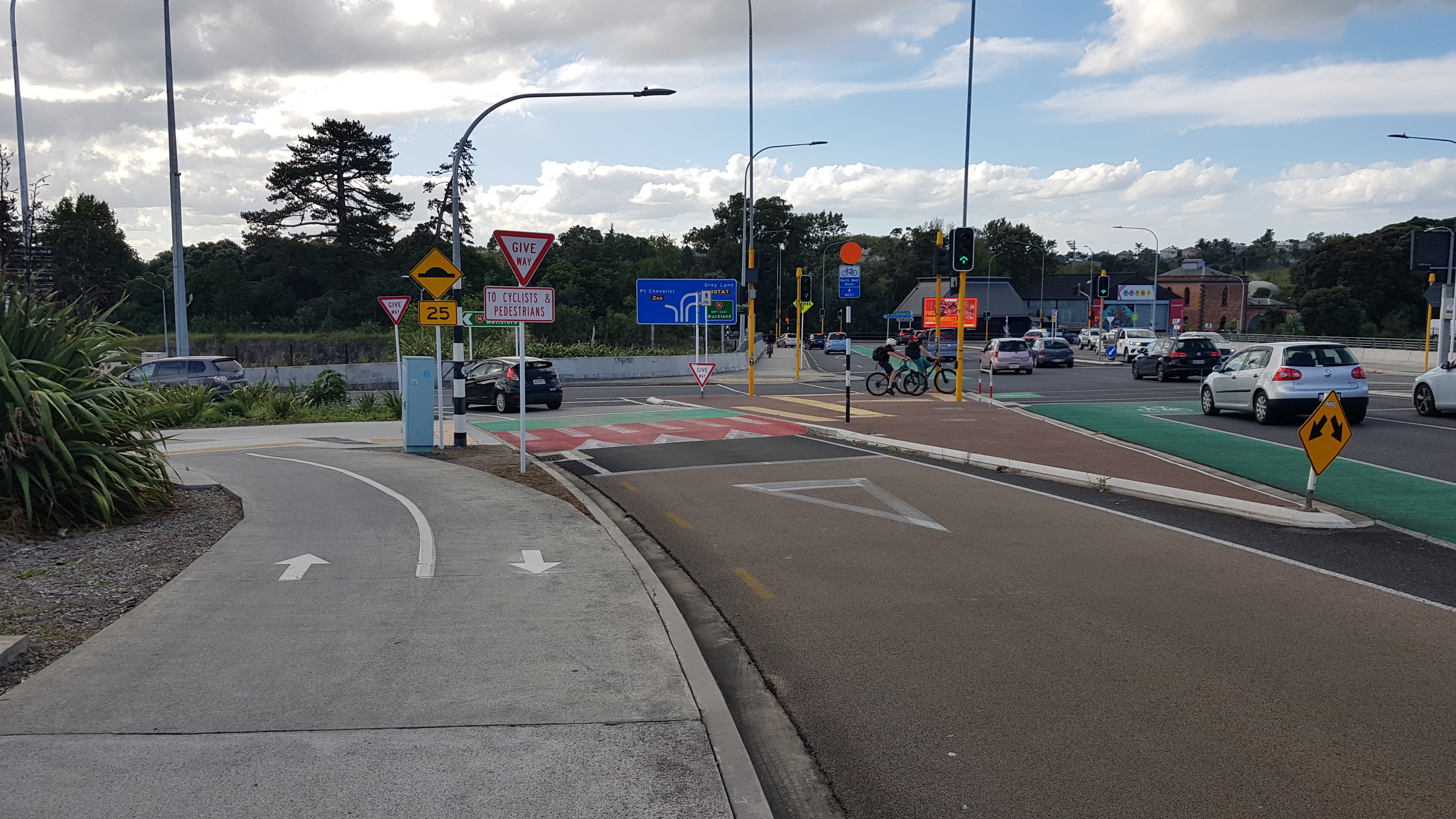
In this white paper, we review the principal left-turn treatment types used at urban signalised intersections, with a particular focus on outcomes for pedestrians and cyclists. We focus on signalised treatments where left turners come from either an exclusive lane or a lane shared with through traffic, and slip lane treatments where slip lane drivers merge directly into a common departure lane where they may immediately conflict with drivers coming from other intersection legs.
Drawing on Australian and New Zealand research, published guidance, and engineering first principles, we examine how factors such as vehicle speed, driver visibility, cognitive workload, and the separation of conflict points influence safety performance.
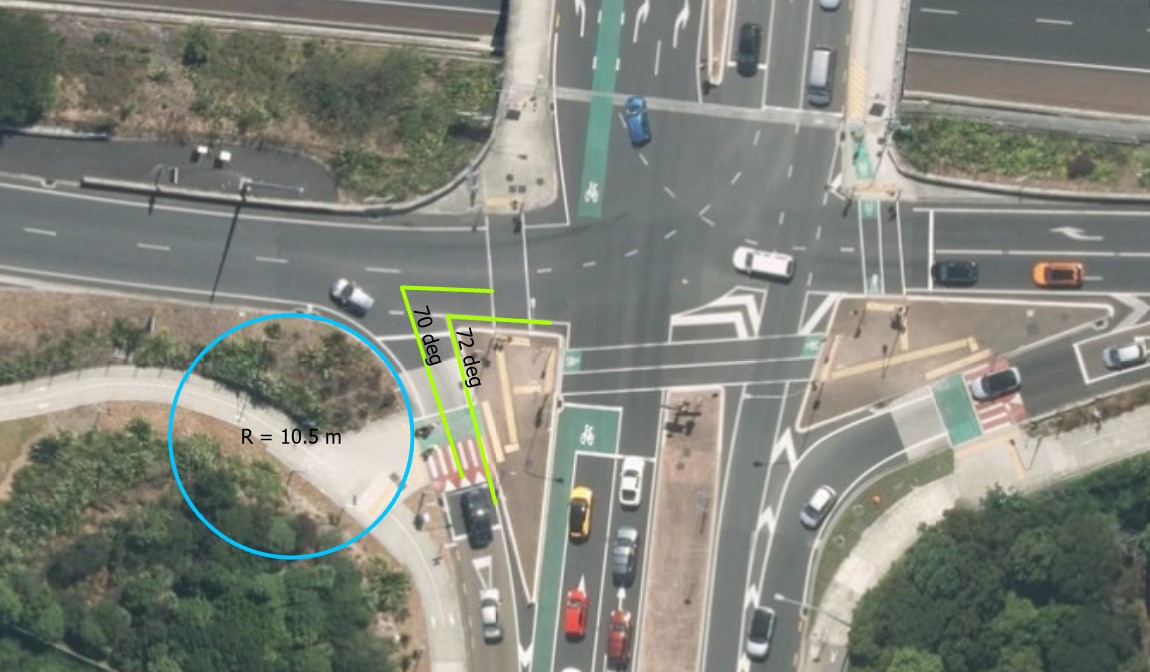
The review finds that the available evidence does not support the view that slip lanes are inherently less safe than conventional signalised left turns. Instead, safety performance varies significantly between treatment types. In particular, high-entry-angle (HEA) slip lanes consistently demonstrate better pedestrian safety outcomes than low-entry-angle (LEA) slip lanes, while conventional signalised left turns generally perform in the middle of the range.
The paper concludes that active-user safety depends less on whether a turn is signalised or accommodated by a slip lane, and more on whether the treatment promotes low vehicle speeds, good visibility, manageable driver workload, and focused driver attention. Where slip lanes are used, emphasis should be placed on achieving high-entry-angle geometry and incorporating features that help drivers recognise and respond to pedestrians and cyclists.
File Downloads