Minimum Data Requirements for Pedestrian Safety Guideline
Where presented / published:
Austroads publication AP-G115-26, May 2026
Developed as part of ViaStrada research into minimum walking data requirements to progress pedestrian safety, this Guideline provides practical advice for Austroads members about what data is available for measuring pedestrian safety and how best to collect and use it.
The advice is based on research that included an academic literature review, practitioner surveys and interviews, government authority website searches, and international database exploration.
This Guideline covers the difference between the ‘ideal’ versus ‘minimum’ data sets. The recommended minimum data set requires minimal cost and effort to collect while making a strong contribution to pedestrian safety objectives. The recommended minimum data for measuring pedestrian safety includes exposure and demographics, crashes and casualties, and environmental data (pedestrian facilities, traffic).
Case studies are presented to illustrate the state of practice and a gap analysis indicates where Austroads members could focus future effort.
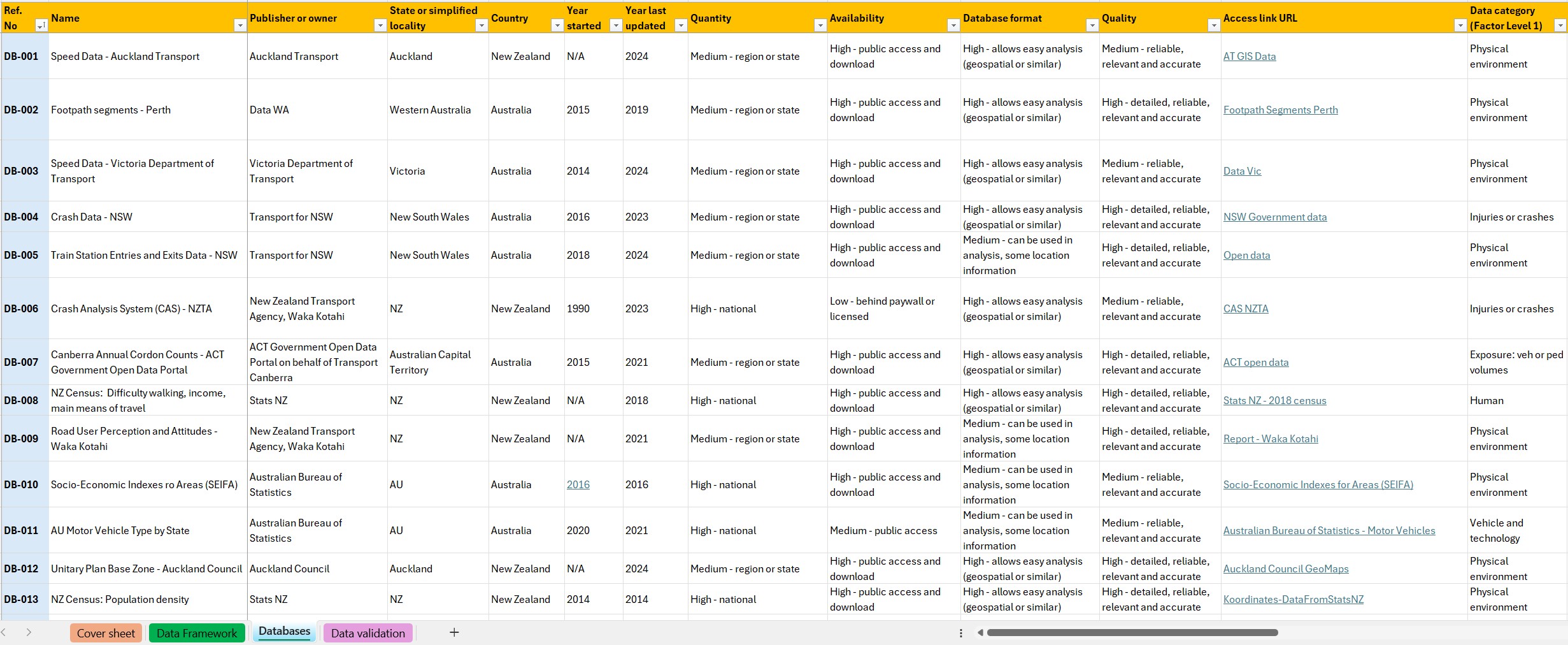
A separate data framework spreadsheet has also been developed to support this Guideline, collating various existing data sets currently available and used by different jurisdictions . The spreadsheet outlines the various types of pedestrian data investigated (particularly those that could be relevant to pedestrian safety) and provides examples of what would be considered ‘acceptable’, ‘good’, or ‘ideal’ instances of each data set.